
Review · VENICE
Venice: Private Walking Tour with Optional Gondola Ride
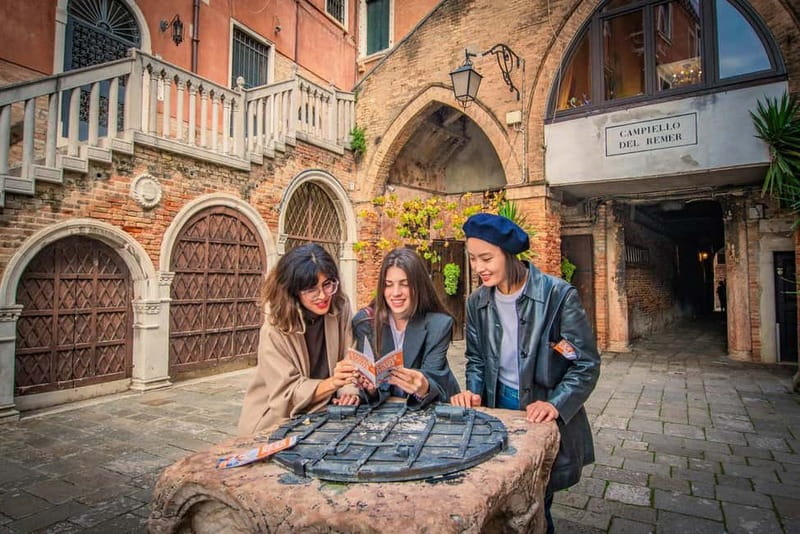
Venice rewards slow wandering. This private or small-group tour takes you beyond the busiest paths, linking La Fenice, the Bovolo Staircase, Marco Polo’s former home, and the Rialto Bridge with stories about trade, architecture, and Venetian life. I like the less crowded route and the chance to ask a local guide direct questions. I also like that you can add a 30-minute gondola ride without committing to a longer boat excursion.
The main drawback is that the sights are viewed from outside. You will not enter La Fenice, museums, or other attractions, so this tour works best as an introduction rather than a full sightseeing pass. The gondola ride also does not include a guide, and the tour is not suitable for wheelchair users.
Key points to know before booking
- The walk begins at Saint Mark’s Square: Meet under the arches of the Correr Museum, where an assistant carries an orange umbrella.
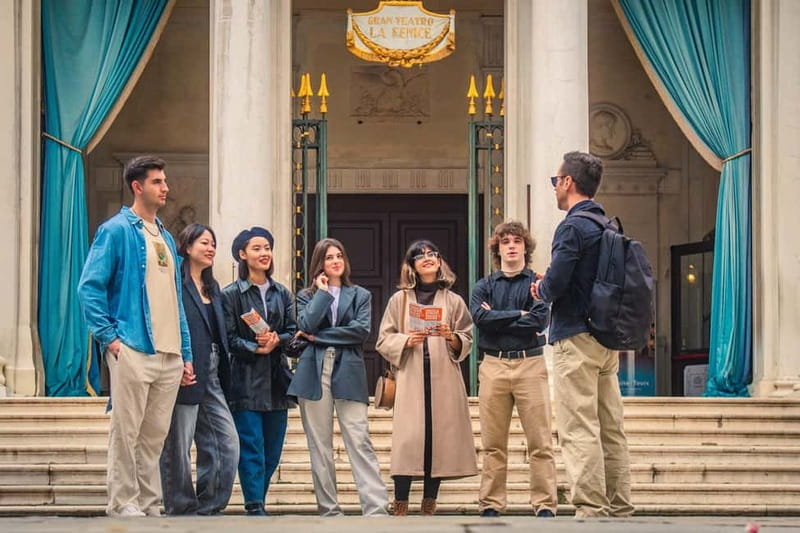
- The route goes past La Fenice: You learn how Venice’s famous opera house burned and was rebuilt to its original form.
- The Bovolo Staircase is a compact architectural surprise: This ornate spiral staircase sits in a small courtyard near the center of Venice.
- The guide adds local color: You can hear about Venetian dialect, city planning, trade, and the problems caused by living on a lagoon.
- The gondola option lasts 30 minutes: It departs from the Santa Maria del Giglio gondola station near the Gritti Palace Hotel, without a guide.
- Comfortable shoes matter: The tour lasts about two hours and uses Venice’s narrow lanes and pedestrian routes.
Why this Venice walk is useful
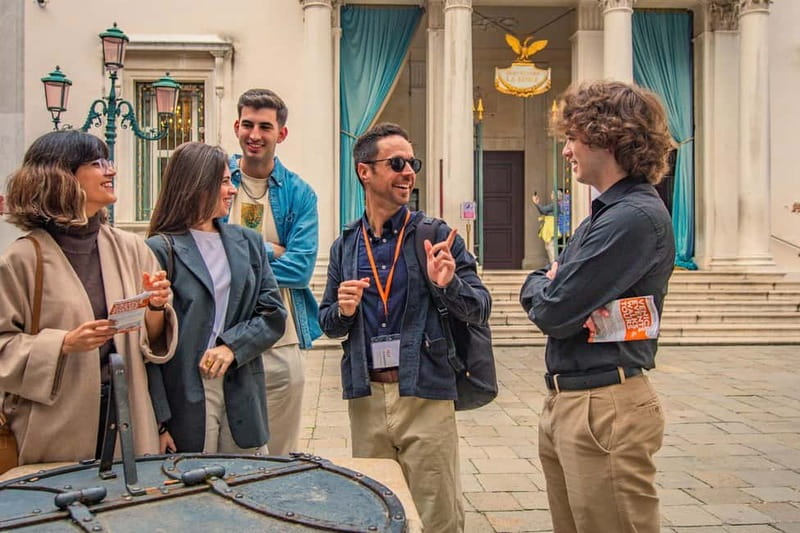
Venice can feel confusing within minutes. A lane turns, a small bridge appears, and suddenly you are nowhere near the place you intended to find. That confusion is part of the city’s charm, but a local guide helps you understand what you are seeing instead of simply passing through it.
This tour is built around that idea. Rather than concentrating only on Saint Mark’s Basilica and the Grand Canal, it takes you through calle, the narrow streets that form Venice’s maze. You still see major landmarks, but you also get the quieter passages between them.
I especially like the balance between famous sights and less obvious corners. La Fenice and the Rialto Bridge give you recognizable Venice, while Palazzo Contarini del Bovolo and the surrounding lanes show you a more intimate side of the city. The guide can also explain why buildings were designed in such unusual ways and how Venice coped with limited land, water, and space.
The tour is available in English, Spanish, French, German, and Italian. Private and small-group formats are available, so you should check the exact option before booking. A smaller group is useful in narrow streets, where a large crowd can block passage and make conversation difficult.
More Gondola Rides with a Walking Tour in Venice:
- Venice Walking Tour and Gondola Ride
★ 3.5 · 3,630 reviews - Venice: City Center Walking Tour & Iconic Gondola Ride
★ 4.3 · 500 reviews - Venice: Walking Tour and Shared Gondola Ride
★ 4.1 · 466 reviews
Meeting at Correr Museum in Saint Mark’s Square
The starting point is under the arches of the Correr Museum on Saint Mark’s Square. This is a convenient central meeting place, but the square can be confusing if you arrive from the waterfront or a side lane. Give yourself extra time to find the correct arches.
Look for the tour assistant with an orange umbrella at the entrance to the square. If you arrive by vaporetto, get off at Vallaresso from Line 1 or Line 2. Walk along Calle Vallaresso, passing Harry’s Bar on your right and the Hotel Monaco and Grand Canal on your left. At the end of the street, turn right toward Saint Mark’s Square, then go under the arches near the post office to reach the Correr Museum entrance.
On foot, simply make your way to Saint Mark’s Square. The museum is on the opposite side from the church, beneath the arcades. The activity ends back at the same meeting point, which makes the tour easy to combine with plans near Saint Mark’s afterward.
Wear shoes that are comfortable for two hours of walking. Oversize luggage is not allowed, and Venice’s bridges and uneven pedestrian routes are not a good match for heavy bags.
La Fenice and the story of a rebuilt opera house
The first major stop is Teatro La Fenice, one of Venice’s best-known cultural buildings. The tour includes an exterior visit, not entry into the theater. Even from outside, the story gives the stop real weight.
La Fenice burned down and was rebuilt to its original glory. Your guide explains this history while also placing the theater within Venice’s wider architectural and cultural life. The name La Fenice means the phoenix, which feels especially fitting for a building that rose again after fire.
This is a good example of what the tour does well. You are not simply shown a pretty facade. You are given a reason to look closely and a story that helps the building make sense. If you want to explore the theater’s interior, you will need to arrange that separately, since entrance tickets are not part of this activity.
The route around La Fenice also moves you away from the most crowded parts of Saint Mark’s Square. That shift is welcome early in the tour. Venice feels different once the broad ceremonial spaces give way to narrow lanes, small squares, and canal crossings.
Palazzo Contarini del Bovolo and the spiral staircase
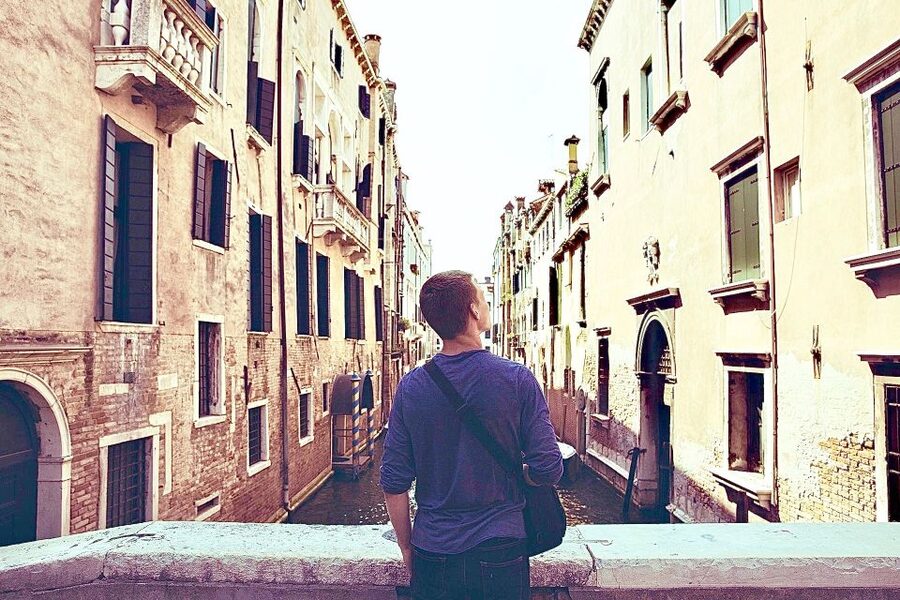
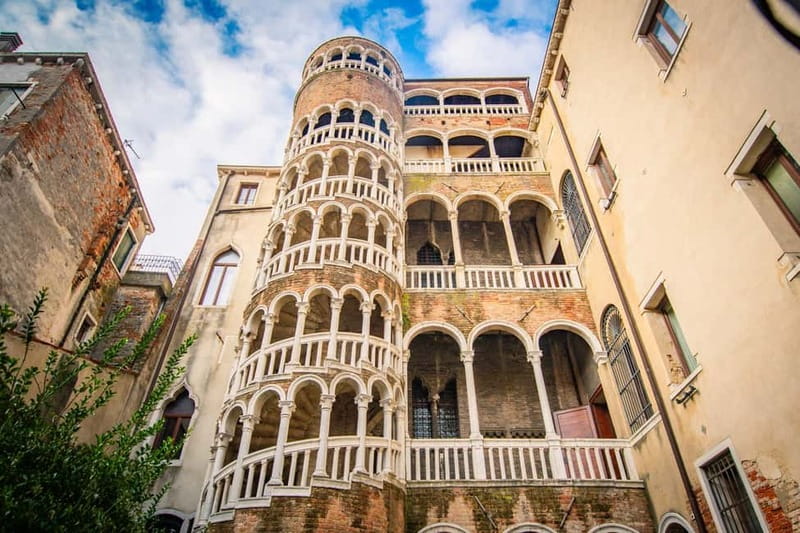
Next comes Palazzo Contarini del Bovolo, best known for the Bovolo Staircase. The word bovolo refers to a snail, a fitting name for the building’s ornate spiral form. The staircase is tucked into a small courtyard, so you could easily miss it while walking through central Venice.
The guide explains the feature from the outside. This is one of the tour’s most appealing stops because it rewards attention rather than size. The staircase is not a vast palace or a grand church. It is a compact architectural detail hidden within the city’s dense pattern of buildings.
I would set your expectations correctly here. The stop is about seeing and understanding the exterior, not climbing the staircase. If you want indoor access or a view from the structure itself, that is not included.
The stop also shows why a local guide can be valuable in Venice. Without context, a small courtyard may look like just another passage. With an explanation of its design and place in Venetian architecture, it becomes one of the more memorable moments of the walk.
More Private Gondola Rides in Venice:
- Venice: Private Gondola Cruise for up to 5 Passengers
★ 3.7 · 3,106 reviews - Venice: Private Crafted Gondola Ride Along Grand Canal
★ 3.8 · 2,854 reviews - Venice: Private Gondola Ride
★ 3.6 · 757 reviews - Venice: Off the Beaten Path Private Gondola Ride
★ 4.3 · 703 reviews
Rialto Bridge, the Grand Canal, and Marco Polo’s house
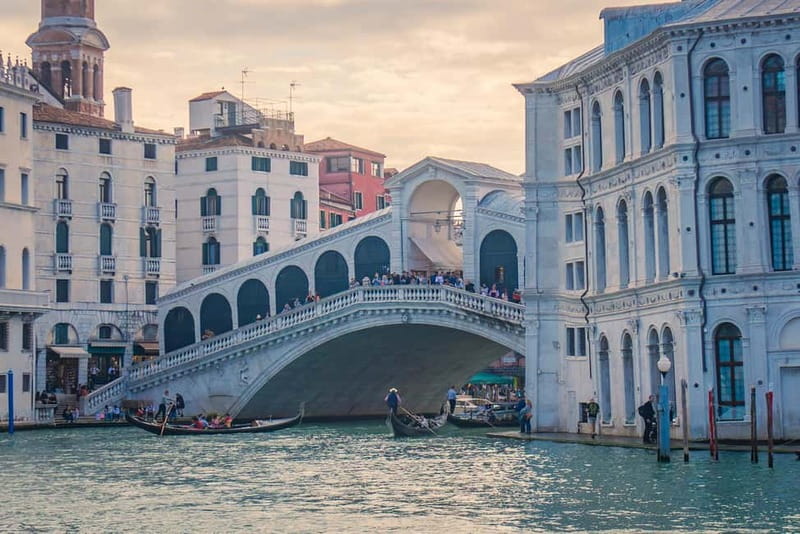
The route continues toward the Rialto Bridge and the Grand Canal. This is the tour’s most instantly recognizable view, and it gives you a chance to connect the quieter lanes with Venice’s main waterway.
The guide discusses the bridge and the trading role of the Rialto area. You also hear how Venice lost some of its commercial advantage after the discovery of the New World changed established trade routes. That shift helps explain why parts of Venice retain a medieval character. The city did not simply keep growing in the same way as other European commercial centers.
The tour also points out Marco Polo’s house and other notable places along the route. The supplied details do not promise entry into the house, so think of it as an exterior landmark accompanied by local explanation.
This section should suit you if you want more than a photo stop. The Grand Canal is easy to admire, but the story about trade gives the view a wider meaning. You begin to see Venice as a working city shaped by commerce, water, and changing international routes, not only as a beautiful collection of palaces.
Venice explained through local stories
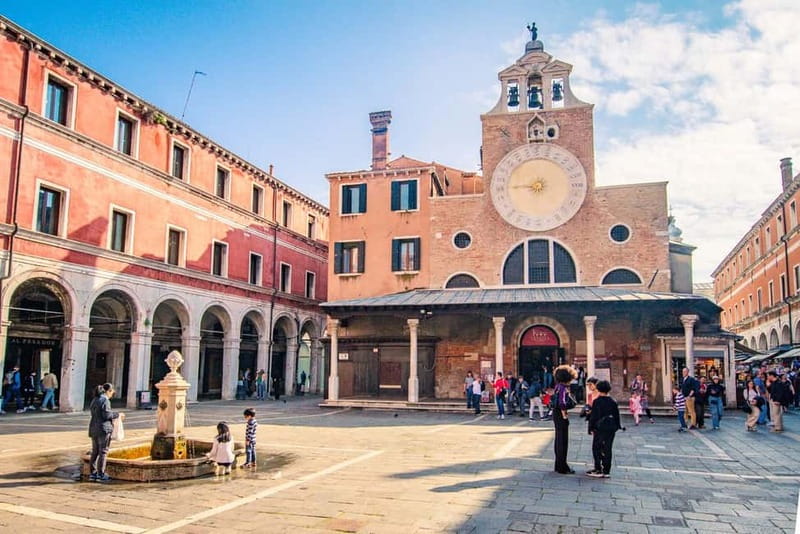
One of the strongest parts of this experience is the guide’s role. The walk includes discussion of the Venetian dialect, the city’s architectural choices, and the practical difficulties of living in Venice.
Venice is beautiful, but it is not an easy place to build or move around. Its lanes, bridges, canals, and limited ground space affect nearly every part of city life. A guide can point out why buildings are arranged as they are and how the city developed around its waterways.
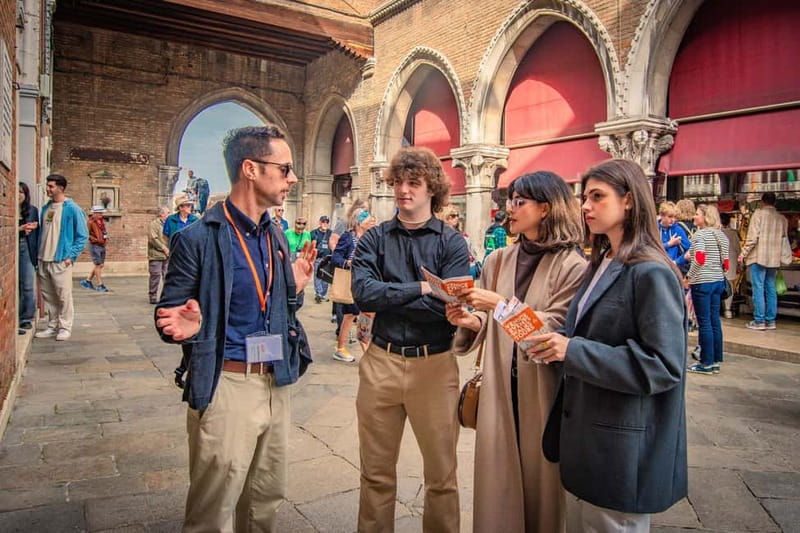
Gianni receives especially warm praise for being prepared and engaging. The best guides make it feel natural to stop and ask questions, and that personal contact is a major reason to choose a private or small-group format. You can ask about a detail that catches your eye instead of waiting for a fixed lecture to finish.
The experience is offered in five languages, but language availability depends on the departure you choose. Confirm your preferred language when checking times.
Should you add the gondola ride?
The optional gondola ride lasts 30 minutes and departs from the Santa Maria del Giglio gondola station, next to the Gritti Palace Hotel. It is a separate, relaxed water experience following the walking portion.
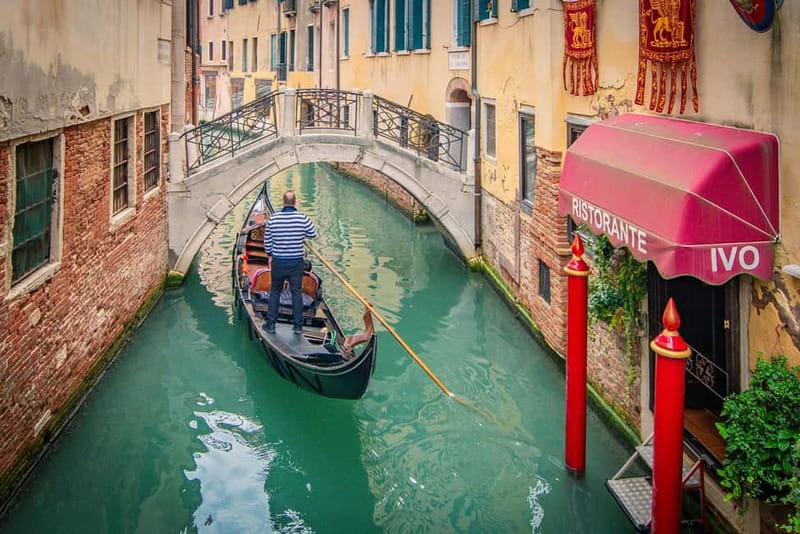
A gondola gives you a different view of Venice. From the canals, facades rise directly from the water, and the city’s tight arrangement becomes easier to understand. After walking through narrow lanes, sitting down for half an hour can also be a pleasant change of pace.
Keep one detail in mind: the gondola ride does not include a guide. The walking portion gives you history and explanation, but the boat ride is simply a ride. That may suit you perfectly if you want quiet time on the canals. If you expect commentary from the gondolier or a second guided tour, you may find the add-on limited.
Check the price carefully when selecting your option. The listed experience price is $150.10 per person, while the gondola is an optional upgrade. The value depends on your group size, the exact booking choice, and how much you value private guiding. For a couple or family that wants a personal introduction to central Venice, the cost can make sense. For a solo visitor focused only on seeing the main sights, a standard group walk may be more economical.
What the two-hour timing means
The guided walk lasts about two hours, with the full activity taking roughly two to two and a half hours depending on the selected option and timing. That is enough time for an overview, but not enough to linger extensively at every stop.
I see this as a useful first-day activity. You can learn the city’s basic layout, hear the major stories, and note places you might return to later. It also leaves room in your schedule for Saint Mark’s Basilica, the Correr Museum, a meal, or an evening walk.
The tour does not include museum or attraction entry. Plan separate time and tickets if you want to go inside La Fenice, the Correr Museum, or other sights. The advertised skip-the-ticket-line feature should not be confused with included admission. The main activity is an outdoor guided walk.
Who will like this tour most?
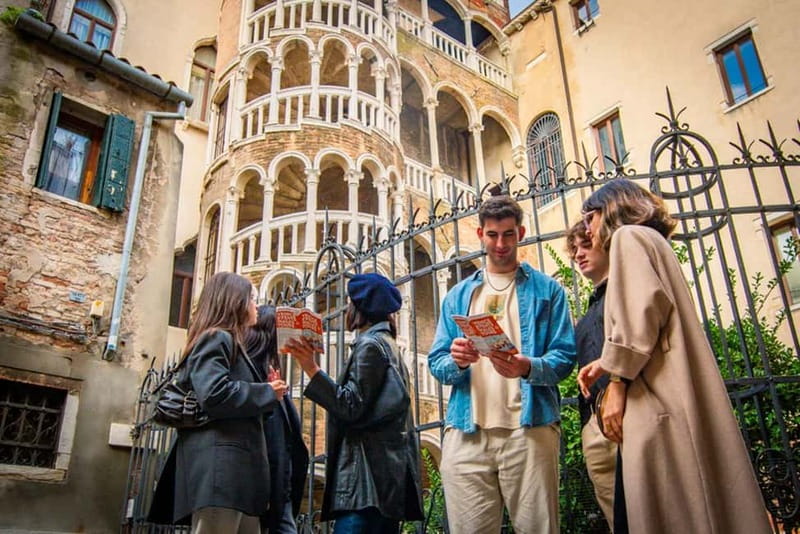
I would recommend it to first-time visitors who want Venice explained by a local rather than simply photographed. It is also a good choice for couples, families, and small groups who prefer the freedom to ask questions.
The route suits people who enjoy architecture, city stories, and quieter lanes. It is less suitable if you want a museum-heavy experience, a long gondola trip, or an accessible route for a wheelchair. The narrow streets and bridges make accessibility a real concern here.
It can also work well for repeat visitors. You may already know Saint Mark’s Square and the Rialto Bridge, but the walk’s focus on lesser-known corners, Venetian speech, and the city’s practical problems can add new layers to familiar places.
The strongest praise centers on the guides and the route away from the main crowds. One particularly useful impression is that the experience can feel like walking around Venice with a local friend. That is a fair description of the tour’s purpose, provided you choose the private or small-group format and take advantage of the guide’s local knowledge.
My verdict on value and experience
At $150.10 per person, this is not a bargain sightseeing walk. You are paying for a qualified local guide, a central meeting point, a private or small-group option, and a route that connects major landmarks with quieter streets.
The value improves if you want personal attention and historical context. It is weaker if you only want quick photos of La Fenice, the Bovolo Staircase, and Rialto Bridge, since all visits are external and the gondola is an extra option.
I like the way the experience joins Venice’s beauty with its difficulties. You hear about opera, architecture, trade, and Marco Polo, but also about the awkward reality of living in a city built around water. That combination gives the walk more substance than a simple landmark checklist.
Should you book this Venice tour?
Book it if you want a well-organized introduction to Venice, prefer a private or small-group setting, and enjoy learning why the city looks and functions as it does. The route is especially appealing if you want to get away from the busiest tourist paths without giving up the Rialto Bridge and other major sights.
Choose the gondola upgrade if you want a short, restful canal ride and do not need commentary during the boat portion. Skip it if you would rather spend your budget on museum admission or a longer independent visit.
Before booking, confirm the language, starting time, group format, and gondola option. If you bring comfortable shoes, arrive early at the Correr Museum, and accept that the attractions are viewed from outside, this tour offers a practical and personable way to get your bearings in Venice.
FAQ
Where does the tour begin?
The tour begins under the arches of the Correr Museum in Saint Mark’s Square.
How do I find the meeting point from the vaporetto?
Take Vaporetto Line 1 or Line 2 to Vallaresso. Walk along Calle Vallaresso, then turn toward Saint Mark’s Square. Look for the Correr Museum and an assistant with an orange umbrella.
How long does the walking tour last?
The guided walking portion lasts about two hours. The total activity duration is about two to two and a half hours, depending on the selected option.
Is the tour private?
Private and small-group options are available. Check the booking choice for the group format you want.
What languages are offered?
The tour is available in English, Spanish, French, German, and Italian.
Does the tour enter La Fenice?
No. La Fenice is visited from the outside. Museum and attraction interiors are not included.
Is the gondola ride included?
The gondola ride is available as an optional upgrade. It lasts 30 minutes and departs from the Santa Maria del Giglio gondola station.
Does the gondola ride include a guide?
No. The gondola ride does not include a guide.
Where does the activity end?
The activity ends back at the starting meeting point near the Correr Museum.
What should I bring?
Bring comfortable shoes. Oversize luggage is not allowed, and the tour is not suitable for wheelchair users.
Just added around Venice
- Venice: Vip Semi-Private Walking Tour with Gondola Ride★ 4.5 · 17 reviews
- Venice: Walking Tour & Gondola Ride★ 4.4 · 22 reviews
- Venice: St. Mark’s Basilica Guided Tour and Gondola Ride★ 4.5 · 2 reviews
- Venice: Private Photoshoot In Gondola★ 5.0 · 13 reviews
- Private Venice Walking Tour and Gondola Ride★ 4.3 · 3 reviews
- Venice: Romantic Palace Dinner and Private Gondola Ride★ 4.7 · 6 reviews
- Venice: Private Evening Stroll with Gondola Ride★ 5.0 · 2 reviews
- Venice: Highlights with Local Private Walking Tour & Gondola★ 4.5 · 10 reviews
Gondola Rides with a Walking Tour, compared.
Winter Walking Tour & Romantic Gondola Ride Upgrade
Read our review →
Unusual Venice Walking Tour through Rialto & Gondola Experience
Read our review →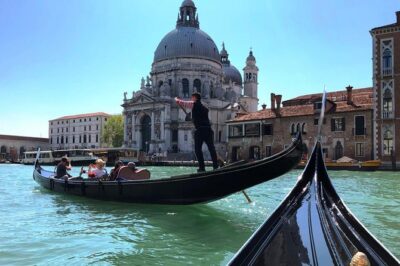
Morning Walking Tour of Venice with Gondola Ride
Read our review →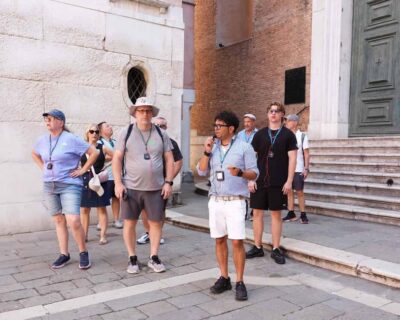
St Mark’s Square & Rialto Walking Tour & Gondola
Read our review →Lists this ride appears in